
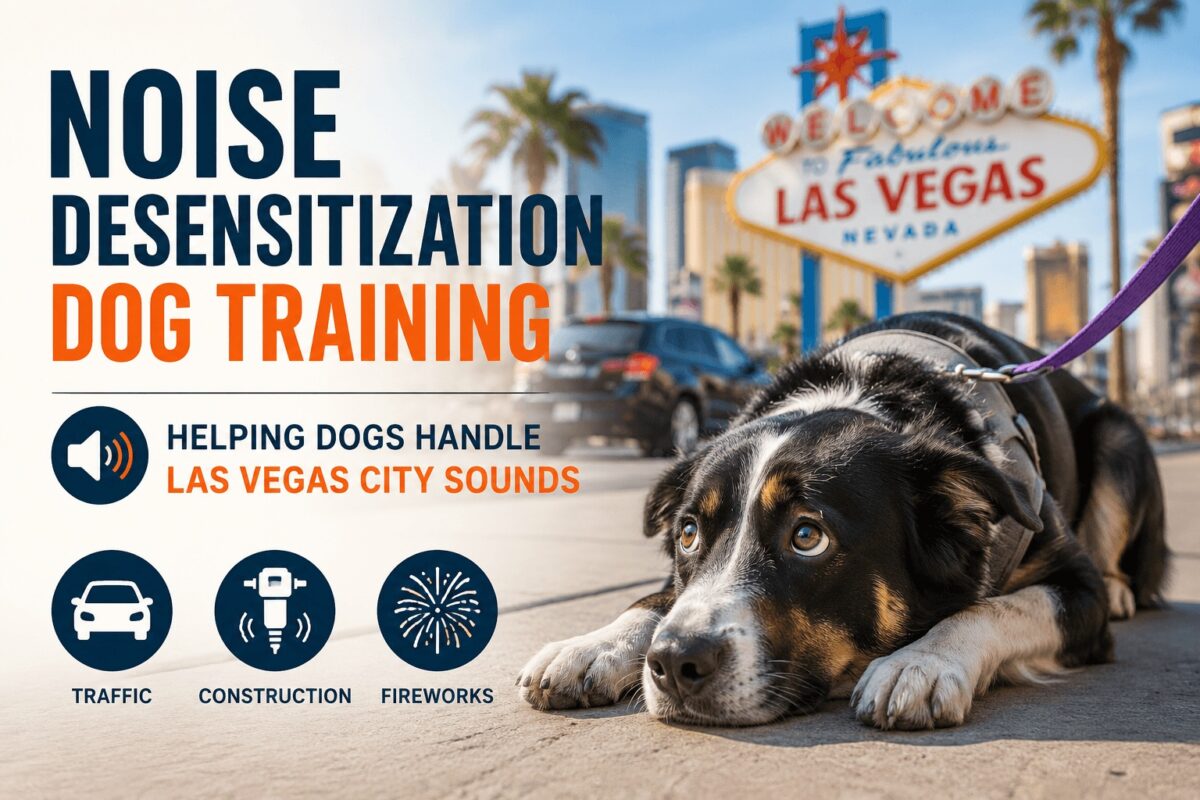
Las Vegas is a city that rarely slows down. From bustling traffic and construction projects to fireworks, the city is filled with sounds that can overwhelm even the most confident dog. While some dogs adapt naturally, many become anxious, reactive, or fearful when exposed to loud and unpredictable noises.
That’s where noise desensitization dog training becomes incredibly valuable. Rather than simply hoping your dog will “get used to it,” a structured training program teaches them how to remain calm and confident regardless of what’s happening around them. Combined with professional dog anxiety training Las Vegas programs and consistent obedience training Las Vegas pet owners can rely on, dogs learn to respond more calmly instead of reacting out of fear.
Whether you’ve recently welcomed a puppy into your family or have an older dog that’s always struggled with loud sounds, the good news is that improvement is possible. With patience, consistency, and the right training techniques, your dog can become more relaxed in noisy environments and enjoy life throughout Las Vegas with greater confidence.
Why Las Vegas Can Be Challenging for Dogs
Living in Las Vegas presents unique challenges that many suburban or rural dogs never experience. Every day, your dog may hear emergency vehicle sirens, helicopters overhead, construction equipment, outdoor concerts, loud motorcycles, airport noise, etc.
Unlike occasional loud noises, these sounds occur regularly. Dogs that never learn how to cope with them often develop anxiety that grows worse over time. Some dogs begin avoiding walks. Others bark constantly, shake, hide under furniture, or become reactive toward people and other dogs.
Fortunately, these behaviors aren’t permanent.
Understanding Why Loud Sounds Trigger Dogs
Dogs experience the world very differently than humans. Their hearing is significantly more sensitive, allowing them to detect sounds from much farther away and at higher frequencies. What sounds like ordinary city noise to you may feel overwhelming to your dog.
When dogs hear sudden loud noises, their brains immediately ask one question:
“Am I safe?”
If they don’t feel safe, the body’s stress response activates.
This often leads to:
- Barking
- Lunging
- Trembling
- Hiding
- Running away
- Excessive panting
- Refusing treats
- Pulling on the leash
- Destructive behavior at home
Without proper training, every frightening experience reinforces these reactions.
What Is Noise Desensitization Dog Training?
Teaching Dogs That Loud Sounds Are Safe
Noise desensitization dog training is a gradual process that changes how dogs emotionally respond to sounds.
Instead of forcing dogs into stressful situations, trainers slowly introduce noises at manageable levels while creating positive experiences.
The process usually includes:
- Low-volume sound exposure
- Positive reinforcement
- Confidence-building exercises
- Relaxation training
- Obedience practice around distractions
- Gradually increasing sound intensity
The goal isn’t to make your dog ignore every sound.
Instead, it’s teaching them: “I hear that noise, but nothing bad happens.”
That shift in mindset is what creates lasting confidence.
Common Signs Your Dog Has Noise Anxiety
Some symptoms are obvious. Others are much more subtle.
Watch for behaviors like:
Physical Signs
- Shaking
- Pacing
- Excessive drooling
- Wide eyes
- Tucked tail
- Flattened ears
- Heavy panting
Behavioral Signs
- Refusing walks
- Barking at every noise
- Hiding
- Running away
- Jumping on people
- Destroying furniture
- Clinginess
- Escaping crates
- Refusing food
If these behaviors happen consistently around loud sounds, your dog could benefit from professional dog anxiety training Las Vegas families trust.
Why Consistency Matters More Than Intensity
One of the biggest mistakes owners make is only working on training once every few weeks. Dogs don’t learn confidence overnight. They learn through repetition. Five to fifteen minutes of daily practice is far more effective than one long training session each month.
Consistency helps dogs predict what’s expected of them. Eventually, calm behavior becomes their default response.
Building Confidence Through Daily Obedience
How Obedience Training Las Vegas Dogs Benefit from Supports Noise Training
Many people don’t realize obedience and confidence go hand in hand. When dogs clearly understand commands like sit, down, place, heel, come and stay, they have something productive to focus on instead of reacting emotionally.
Imagine hearing a loud truck. Instead of barking uncontrollably, your dog hears:
“Place.”
That familiar command redirects their attention.
Over time, obedience becomes an emotional anchor during stressful situations.
Professional obedience training Las Vegas programs intentionally practice commands around distractions to strengthen this skill.
Confidence-Building Exercises Every Dog Can Practice
Building confidence extends beyond obedience. Simple activities teach dogs they can safely overcome new experiences.
Examples include:
Walking Different Routes
New environments expose dogs to different sounds in manageable ways.
Climbing Safe Obstacles
Park benches, rocks, or agility equipment build confidence.
Exploring New Surfaces
Whether its grass, concrete, metal grates, etc., each successful experience teaches adaptability.
Food Puzzles
Mental stimulation reduces overall anxiety.
Structured Play
Games strengthen trust between owner and dog.
Gradual Exposure Works Better Than Flooding
Some owners accidentally overwhelm their dogs by taking them directly into busy downtown areas. This approach often backfires. Instead, trainers use gradual exposure.
For example:
Week 1: Quiet neighborhood.
Week 2: Moderate traffic.
Week 3: Busier intersections.
Week 4: Shopping centers.
Week 5: Outdoor cafés.
Week 6: Downtown Las Vegas.
Each successful step builds confidence before introducing more difficult situations.
How Positive Reinforcement Speeds Progress
Rewards change emotions. Every time your dog hears a concerning noise but remains calm, reward them. Rewards may include treats, praise, toys, play, and even affection. Eventually, loud sounds predict good things instead of scary ones. That’s exactly what noise desensitization dog training is designed to accomplish.
Avoid These Common Mistakes
Even well-intentioned owners sometimes slow progress.
Avoid the following:
- Punishing fear – Fear isn’t disobedience. Punishment often increases anxiety.
- Moving too fast – Large jumps between environments create setbacks.
- Inconsistent rules – Everyone in the household should reinforce the same expectations.
- Skipping daily practice – Confidence fades without repetition.
- Comforting panic excessively – Remain calm yourself. Reward calm behavior instead of unintentionally reinforcing fearful reactions.
Why Puppies Benefit from Early Noise Training
The earlier dogs experience positive sound exposure, the better.
Responsible socialization includes hearing:
- Vacuum cleaners
- Hair dryers
- Thunder recordings
- Fireworks recordings
- City traffic
- Children playing
- Shopping carts
- Construction sounds
Puppies that experience these sounds positively often become far more resilient adults.
Helping Rescue Dogs Recover from Noise Trauma
Many rescue dogs arrive with unknown histories. Some may have experienced abuse, neglect, abandonment, natural disasters, and previous accidents. These experiences can make loud sounds even more frightening. Recovery requires patience.
Professional trainers adjust the pace based on each dog’s emotional comfort level. Progress may take weeks or months, but many rescue dogs improve dramatically through structured training.
Why Professional Training Often Produces Faster Results
While owners can absolutely help their dogs at home, professional trainers bring valuable experience.
They know:
- How quickly to increase distractions
- How to read canine body language
- When dogs are becoming overwhelmed
- Which exercises build confidence fastest
- How to avoid creating setbacks
Professional dog anxiety training Las Vegas programs also provide controlled environments where dogs safely practice around carefully managed distractions. This structured approach often reduces frustration for both dogs and owners.
Everyday Situations That Become Easier After Training
A confident dog enjoys far more freedom. Owners often notice improvement during walks along busy streets, community events, veterinary visits, fireworks holidays, road trips, etc. Instead of constantly scanning for danger, trained dogs learn to relax and focus on their handler.
Training doesn’t stop after walks. Home routines matter too.
How to create a calm home environment:
- Create predictable daily schedules.
- Offer regular exercise.
- Provide mental enrichment.
- Practice obedience indoors before adding distractions outside.
When dogs know what to expect, they generally feel more secure. That emotional stability carries into noisy environments.
Every Dog Learns at Their Own Pace
It’s important to remember that every dog is an individual. Breed, age, genetics, personality, and previous experiences all influence how quickly they adapt to loud sounds. Some dogs improve within weeks. Others require several months. The key is consistency.
Every calm experience builds confidence. Every successful training session creates another positive association. Eventually, what once caused panic becomes just another everyday sound.
Take the Stress Out of City Life with Professional Training
Living in Las Vegas doesn’t have to mean constantly managing your dog’s fear of loud noises. Through consistent noise desensitization dog training, structured dog anxiety training Las Vegas programs, and reliable obedience training Las Vegas families trust, your dog can learn to stay calm, focused, and confident—even in one of the busiest cities in the country.
At Off Leash K9 Training of Las Vegas, we specialize in helping dogs overcome fear, anxiety, and reactivity using proven, positive training methods tailored to each dog’s personality and needs. Whether your dog struggles with traffic, fireworks, construction noise, or crowded public spaces, our experienced trainers can help build lasting confidence and reliable obedience. Contact us today to schedule a consultation and help your dog enjoy a calmer, happier life throughout Las Vegas.
Conclusion
City living presents unique challenges for dogs, but loud noises don’t have to control your dog’s life. With patience, consistency, and the right training approach, dogs can learn that traffic, sirens, fireworks, and everyday city sounds are simply part of the environment—not something to fear.
Consistent practice, confidence-building exercises, gradual exposure, and professional guidance work together to create lasting behavioral change. Rather than simply managing anxiety, noise desensitization dog training helps reshape how dogs emotionally respond to the world around them. Whether you have a playful puppy or an older rescue dog, investing in quality training today can lead to years of calmer walks, more enjoyable outings, and a stronger bond between you and your dog.